


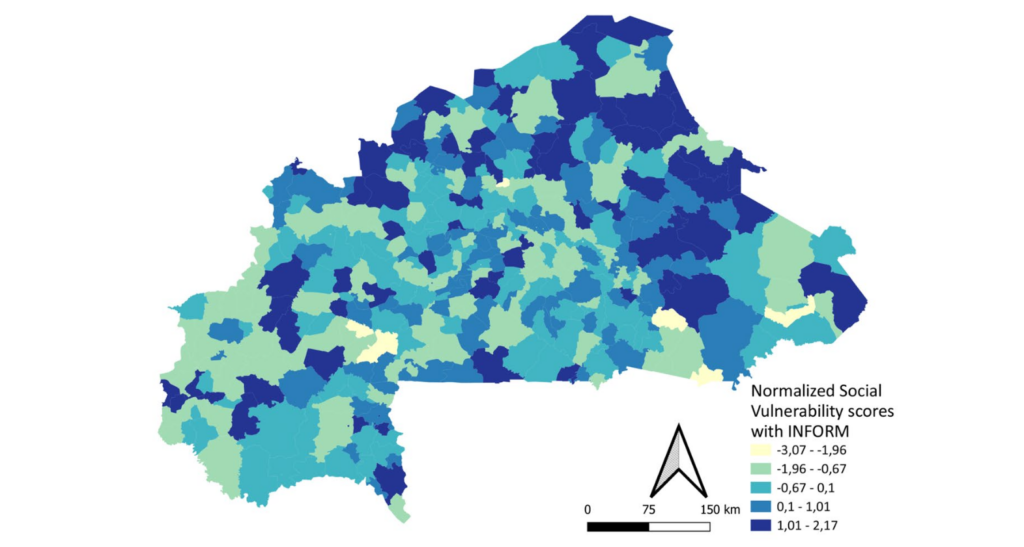
Comparing hierarchical and inductive methods reveals fundamental differences in social vulnerability rankings
Social vulnerability assessments play a crucial role in guiding the allocation of budgets and resources for effective disaster preparedness and humanitarian response. Climate change, escalating conflicts, and the climate finance and humanitarian funding gap make social vulnerability assessments essential. Despite advances in data collection, availability, and analysis, there remains a lack of consensus regarding the most suitable method to assess social vulnerability. This study sheds light on the consequences of methodological choices on social vulnerability assessments by comparing two commonly used methods in space and over time: the inductive principal component approach and the hierarchical INFORM approach.